

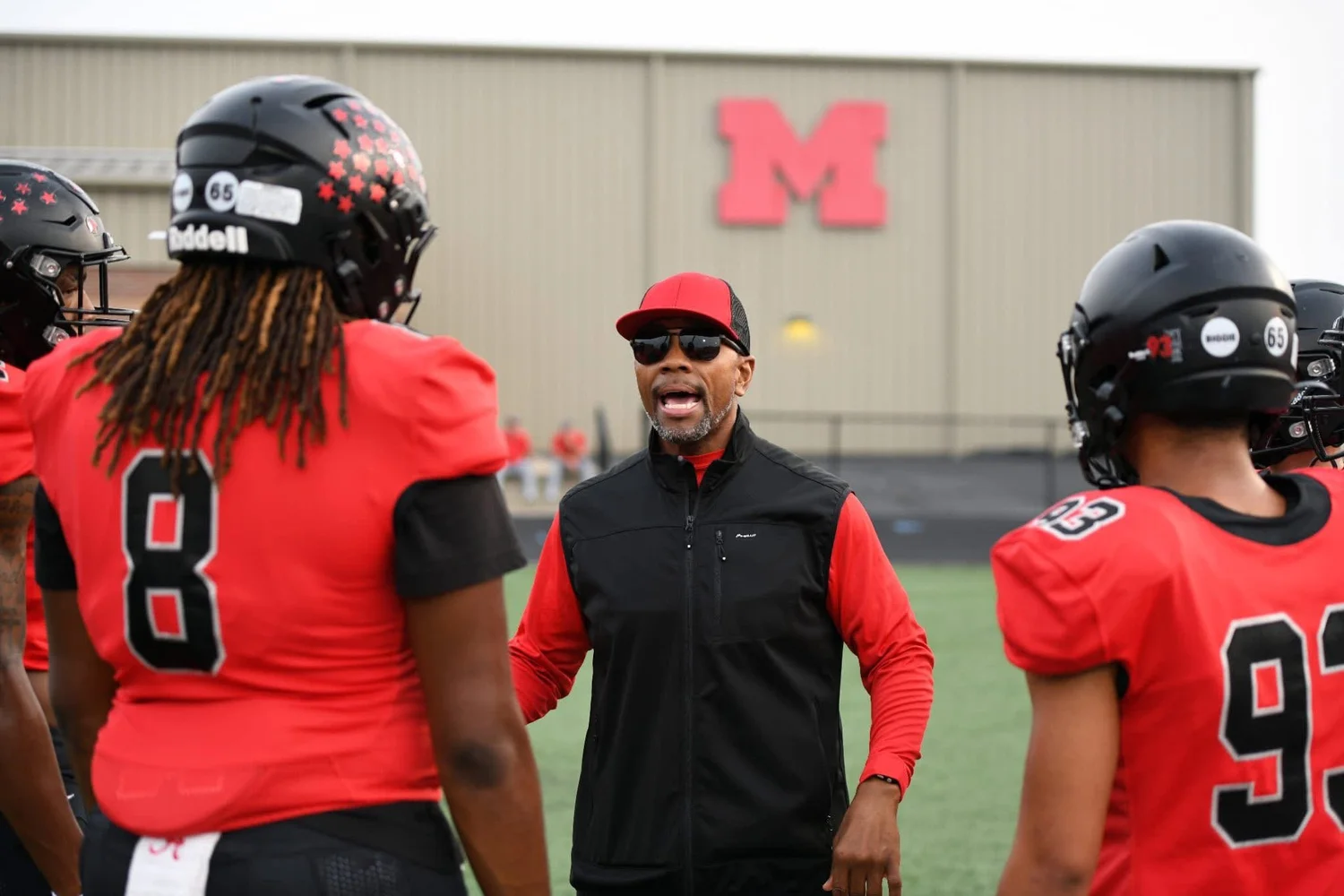
Coach Eric Rocc Little of Muscle Shoals High School

Episode 05  •  Guest Profile

Eric “Rocc” Little.

Eric “Rocc” Little is a Muscle Shoals football coach and social science teacher whose standard is built on hard coaching, faith, relationships and the unsexy work that turns a football team into a lasting program.

The calling found him at the right time.

Eric played football at Deshler High School, but coaching was not initially the career he imagined for himself. After graduation, he considered computer programming and eventually worked night shifts for an aerospace company.

The work provided stability, but it did not answer the question he kept carrying: what could he do for the rest of his life and remain happy doing it? Football was the subject he could study, discuss and diagram for hours without losing interest.

Eric began praying about the possibility of coaching. Within days, former Deshler offensive coordinator Kevin Rose approached him at the gym and asked whether he had ever considered helping with the program at Sheffield.

Eric took the invitation as confirmation. His coaching path would eventually include Sheffield, the University of North Alabama, Columbia and Muscle Shoals, with each stop teaching him something different about athletes, schools and leadership.

Teaching in every room.

Football

Eric helps develop Muscle Shoals athletes inside a program known for demanding preparation, accountability and physical effort. The expectation is that players leave everything they have on the field.

The Classroom

His role as a social science teacher extends the same leadership into the school day. Eric approaches history as something worth teaching with depth, not simply a class attached to a coaching position.

Program Culture

A lasting football program requires coaches with different backgrounds and personalities to work toward one standard. Players watch how those adults prepare, communicate and respond long before Friday night begins.

Hard coaching requires real trust.

Muscle Shoals does not depend on having a roster filled with obvious future professionals. Eric describes players who often perform above what outsiders initially expect because the program consistently demands more from them.

That standard is direct. Players are corrected, challenged and expected to respond. Hard coaching is not presented as punishment. It is part of preparing young athletes to become dependable when pressure arrives.

The approach only works when the relationship beneath the correction is genuine. Eric believes the athletes are what make coaches good. Their trust, development and willingness to buy into the work are what allow the program to succeed.

He also learned that leadership requires the ability to connect with different personalities. A successful staff cannot be made of one type of person. Coaches must learn from one another while keeping the expectations consistent.

Friday night is the part everybody sees.

Fans remember the lights, the touchdowns and the final score. They do not always see the seven-day workweeks, summer mornings, film sessions, long practices, manual labor and constant adjustments required to prepare a team.

Eric calls that process the unsexy work. It includes the parts of coaching that do not create highlights but determine whether the product shown on Friday night is disciplined, prepared and worthy of the program’s name.

The work also explains why successful programs are not created overnight. Muscle Shoals was not always viewed as a football powerhouse. Its current expectations were constructed through years of restructuring, consistency and young athletes accepting a harder standard.

Friday night is not the beginning of the work. It is the moment the community finally sees what the team has been building all week.

The game can become an entire identity.

Football can consume an athlete’s life from early childhood through college or the professional level. When that experience ends, especially when the athlete did not choose the ending, the absence can leave a serious emotional void.

Eric compares that transition to someone retiring after spending a lifetime inside one career. The routines, relationships, attention and sense of purpose disappear at the same time.

That is why coaching must prepare athletes for more than the next game. Players need character, relationships, faith and an understanding of who they are when football is no longer available to organize their lives.

The responsibility is bigger than producing a winning season. A coach is helping shape the person who will remain after the uniform comes off.

Friday night is the receipt. The culture was built all week.

The visible result is only the final piece. Muscle Shoals football is built through preparation, hard conversations, relationships and the willingness to repeat demanding work when there is no crowd watching.

“You don’t just show up on Friday nights and be successful.”

Continue the Story